

How to Plagiarize
A Practical Field Guide

Plagiarism has moved beyond the dark arts that students perform at 2 a.m., the night before an assignment is due. Now, thanks to AI, plagiarism has been professionalized, finding its way into research and scholarly publications, and worming its way into social media-fueled articles. Advice and expertise has become a strange blend of intellectual squatting and plagiarism, where plagiarism and copyright infringement have melded to elevate voices that otherwise have no grounding in expertise or practice. For lack of media literacy and information literacy, the engagement and clicks are prioritized over quality and original thought, where algorithms favor salacious claims and social roll call linking, defaming the original thoughts and research so painstakingly curated of authors.
Since it seems as though the ethics that define plagiarism and legal remedies for copyright infringement have lost their teeth, let’s approach the plagiarism and copyright infringement problem head on rather than beat around the bush. Joe Reis suggested I publish a practical how-to-plagiarize, because it’s going to happen no matter what and why not teach people how to plagiarize, with or without machines?
So here it goes.
First, the definitions, because vagueness is the plagiarist’s best friend. Teddi Fishman’s 2009 definition, adopted by the International Center for Academic Integrity, hangs on four qualifiers:
you use words or ideas
attributable to an identifiable source
without attributing them
in a situation where original authorship is expected
to gain some benefit, credit or gain that “need not be monetary.”1
Every act of plagiarism below is engineered to blur one of those four qualifiers.
How to Steal an Idea, Call It a Hot Take
Step 1: Read the newsletter. Absorb the framework but say nothing. The framework is the asset but the prose is disposable flair. Fishman’s definition covers ideas, not only words, so strip the language entirely and you have covered your tracks on qualifier two, omitting attribution. The ideas become your own by virtue of reading. No comments or dialogue with the newsletter or article. It’s as if the act of reading content makes one an expert and able to profess the ideas and framing ingested.
Step 2: Wait four days. Immediacy looks like copying. A four-day delay looks like convergent genius. This is hands down the single most important step. Post the framework as a LinkedIn carousel under “Here’s a mental model I keep coming back to.” The passive construction is presented as enlightenment. And the author presents themselves as someone that is well versed in the topic(s) at hand. Enough so to distill the plagiarized concepts into a consumable format that avoids publishing the framework in the same format as the original author.
Step 3: If four days isn’t enough distance, launder the provenance through a conversation. “This came out of a chat I had with a founder last week” converts an identifiable source with attribution, a vague one that carries heft. You have not lied, exactly. You have simply declined to identify the source but have alluded to there being a source. That is the plagiarism crime by way of elusive authority.
Step 4: Adopt the posture and expertise. AKA the deep domain expert deepthinker. “As someone who’s been thinking about this for a while…” manufactures the legitimate expectation of original authorship out of thin air, because original authorship is expected. So does “I’ve been mulling this over,” deployed immediately above a paraphrase derived from a paywalled piece you read once.
Step 5: For quoted tweets, restate the original point as your own value add. Screenshot the text — cropping out the byline is a nice touch — and add commentary that reframes their thesis as your insight. Reposting the screenshot itself, with no handle, is the purest form of intellectual and epistemic squatting, with plagiarism threaded throughout.
Step 6 (the consultant tier): Rebrand an established discipline. Library science has had controlled vocabularies for over a century. Rename them “context graphs,” drop them into a venture white paper, but do not include citations.
When a venture firm markets the “context graph,” what it describes is, in the disciplinary vocabulary of information science, a procedural knowledge graph grounded in formal ontologies — with provenance, temporal validity, entity resolution and controlled vocabularies underneath. The toolkit predates the marketing. Call this move epistemic squatting which takes the intellectual territory someone else built, changes the locks and charging for rent. Its academic cousins are just as recognizable — citing only the abstract, citing papers never read and thereafter dropping the “as cited in” so a secondary popularizer becomes your primary source. Cite the famous popularizer, never the originator.
None of this is copyright infringement, and that is the point. You can plagiarize a public domain text — Fishman’s own paper is titled to insist that plagiarism must be defined beyond theft, fraud and copyright — and you can infringe copyright without plagiarizing at all. Ideas are not copyrightable as was settled in TRIPS Article 9(2) and Baker v. Selden (1879 under which both hold that protection extends to expression, not to the underlying system, method or idea.2 In other words, ideas are free for all to share so the framework you lifted was never protected by copyright. It was only ever protected by attribution norms — which is to say, by nothing enforceable, just plain ethics.
How to Infringe Copyright Like a Normal Person
Let’s clear up some misunderstandings. People rely on these myths to justify copying. Let’s shine light onto these fallacies.
Myth 1: Attribution equals permission. Repost the full article, add credit to the original author and call your job done. But the job is not done because naming someone is not a license. Federal US copyright law (Title 17 of the US Code) gives the author the exclusive right to reproduce their work, and your kind acknowledgment doesn't change that. This is the crux of the myth. Crediting does not cure the plagiarism and does nothing to change the fact that you plagiarized. Infringement is infringement no matter if you tagged the author you infringed upon.
Myth 2: Educational purposes is a magic phrase. Upload the full PDF to a sharing site “for educational purposes.” Fair use under 17 U.S.C. §107 of US Copyright Law is a four-factor balancing test — the purpose and character of the use, the nature of the work, the amount used and the effect on the market.3 Uploading the whole work maxes out factor three and usually sinks you on factor four. “Educational” is one input to one factor, not a shield.
Myth 3: A disclaimer is immunity. “No copyright infringement intended” has the same legal force as “no speeding intended.” Intent is not an element of direct infringement.
Myth 4: Found on Google is free to use. Dropping an entire image from Google Images into your deck, or citing “I found it on Pinterest” as provenance, does not locate the rights holder or creator; it simply states, “I got this screenshot here”. Cropping the watermark or running a filter does not create a new work — a minor modification is not the originality the law requires, and it may itself be an infringing derivative.
Myth 5: A cover song is fair game if you credit the artist. Posting a cover to YouTube is not covered by attribution, or even by the compulsory mechanical license under §115, which covers audio only. Video needs a synchronization license, which is not compulsory — the rights-holder can simply say no. Attribution licenses nothing.
Myth 6: Everything is a remix, so nothing needs a credit. This is the myth with the best pedigree, which is probably why it’s the most abused. Yes, there is a genuine, serious remix tradition. Lawrence Lessig — who founded Creative Commons in 2001 — argued in Remix (2008) for a “Read/Write” culture over a passive “Read/Only” one.4 Kirby Ferguson’s web series Everything Is a Remix distilled creativity into three moves— copy, transform, combine.5
Here’s why remix is so dangerous. Every serious remixer built infrastructure for credit. Of the six current Creative Commons licenses, all six require attribution — the “BY” element — and only the CC0 public-domain dedication, which isn’t technically a license, waives it. Creative Commons retired its five non-attribution licenses precisely because 98% of licensors wanted credit. Sampling culture developed elaborate clearance and credit norms. But unlicensed sampling is not okay, says Bridgeport Music v. Dimension Films — “Get a license or do not sample.” The remix’s one non-negotiable norm is that you give attribution to the original work you’re standing on. The social media “remix” excuse strips out the attribution requirements.6
And there is law that appeals to remix, although it has narrowed. Transformative use was born in Campbell v. Acuff-Rose Music (1994) — 2 Live Crew’s parody of “Oh, Pretty Woman.”7 But in Andy Warhol Foundation v. Goldsmith (2023), the Supreme Court held 7–2 that “new expression … is not, without more, dispositive,” and that where two works “share the same or highly similar purposes” and the use is commercial, fair use likely loses.8 Adding your face reacting to someone’s video and calling it “transformative” is, legally, wishful thinking. The crime has been normalized by sheer volume of content practicing these violations. This becomes a game of how to catch a predator when in a sea of predators and everything is monetizable.
To be pragmatic about what’s going on with remix is to acknowledge where the line is drawn. A duet or stitch is a license between you and TikTok — not permission from the creator to re-upload their work to your own account. Re-uploading someone’s video natively to farm your own engagement is known as freebooting.9 And reposting a joke with the handle cropped off isn’t a remix. Freebooting is the thing the #FuckFuckJerry campaign was about. “Everything is a remix” is true but a remix, done right, has a tracklist. 10
How to Launder It Through a Machine
Here’s the industrial scale version because let’s be real about the state of plagiarizing affairs. Most writers today are writing with AI or having AI generate content without even a glance at the output before hitting “publish”. Large language models are, functionally, attribution-stripping engines. They ingest sourced text and emit unsourced text, which is the entire plagiarism workflow.
The Summarizer Move
“Summarize this article in my voice, then publish.” Copyleaks’ February 2024 study found that 59.7% of GPT-3.5 outputs contained some plagiarized content — 45.7% carrying identical text, 27.4% minor changes, 46.5% paraphrased — across 1,045 outputs.11 The machine is not inventing; it is recombining sources it will not name.
The Stylized Theft Move
“Write a post about X in the style of [popular writer].” You are laundering a person’s voice — which the law barely touches — through a system trained on their work. This is the conduct at the heart of The New York Times v. OpenAI: the Times’ Exhibit J ran to more than 100 pages of near-verbatim reproductions, and on April 4, 2025, Judge Stein held those examples gave rise to a plausible inference of infringement and let the core claims proceed.12
The Detector Defeat Move
Run the source article(s) through a paraphraser so it “doesn’t look copied.” Philip Baron’s 2024 case study demonstrated the full pipeline: a plagiarized passage scored 99% similarity in Turnitin and one pass through QuillBot dropped it to 31%. A second pass dropped it to 1% and the original source vanished from the report entirely. Then reach for a “humanizer” tool to strip the last statistical fingerprints. 13 My college age kids educated me on this common maneuver, viral in most university settings, where plagiarism checkers abound.
Don’t fool yourself. The double paraphrase does not make the work original. You are only attempting to cover your tracks. As for legal remedies under copyright law, the law only cares about whether the expression is still recognizably copied — and the paraphraser's entire function is to erase anything recognizable. In this case, the theft of the idea remains but the legal copyright claim becomes harder to prove.
Where It Stops Being Funny
Every plagiarism move is recognizable because it is ubiquitous, and you have most likely experienced at least one of these plagiarizing content strategies.
Plagiarism has formal definitions, and they are demanding, developed over years to substantiate research integrity, original thought and most critically, for the advancement of science and discovery. The Office of Research Integrity treats “substantial unattributed textual copying” as misconduct under 42 C.F.R. Part 93, while carving out a safe harbor for the standard methodological phrasing everyone reuses.14 The IEEE grades severity across five levels in §8.2.4 of its PSPB Operations Manual.
There’s even a concept called “self plagiarism” which accounts for an author using his or her own words from prior publications, un-cited. That’s right—an author can plagiarize an his or her own work. ACM defines self plagiarism as the verbatim or near verbatim reuse of significant portions of your own work without citing the original. COPE calls the same thing “text recycling.” These bodies built taxonomies because “we know it when we see it” was never good enough. For the sake of research, science and the labor of authorship, taxonomies for plagiarism detection serve as governance, with the loftier objective of preserving scholarship and research.
But here is the vacuum. Attribution — the thing every plagiarism move attacks — is the thing the law protects least, at least in the United States. The relevant moral right is the droit de paternité, the right to be named as author, guaranteed by Berne Convention Article 6bis “independently of the author’s economic rights, and even after the transfer of the said rights.”15
France makes copyright infringement and plagiarism violations perpetual, inalienable and imprescriptible under Article L121-1 of its Intellectual Property Code. Germany’s Urheberrecht treats it as inseparable from the author’s person. The UK recognizes it in the CDPA 1988 §§77–79 — then hobbles it with §78, under which the right is not infringed unless the author has first asserted it in writing. And the United States? It implemented Article 6bis almost entirely through VARA, 17 U.S.C. §106A, which reaches only a narrow class of visual art in signed editions of 200 or fewer. If you write, code, model or architect knowledge for a living, the American legal answer to “do I have a right to be credited?” is, essentially, no. Sad but true.
So the behaviors are recognizable because there is no enforcement backstop for the interests they violate. Attribution is infrastructure — the critical layer that lets a knowledge network say where a claim came from and whether to trust it — and LLMs strip it at an industrial scale, systematically and by design. I wrote an essay about provenance, citation stripping and AI titled, Where provenance ends, knowledge decays published February 14th, 2026. So yes, I have been writing and thinking about this for some time having fallen victim to large scale plagiarism back in December 2025-January 2026.
The satire within this piece probably lands because you’ve seen these plagiarizing behaviors exercised in the wild. The tragedy is that almost none of these plagiarism moves are illegal. This is about attribution harm — someone claims credit for your ideas, frameworks and work. But when one of these moves does happen to break a law, it’s copyright infringement — and copyright doesn't care about credit at all. It cares about copying expression and protecting the economic value of that expression.
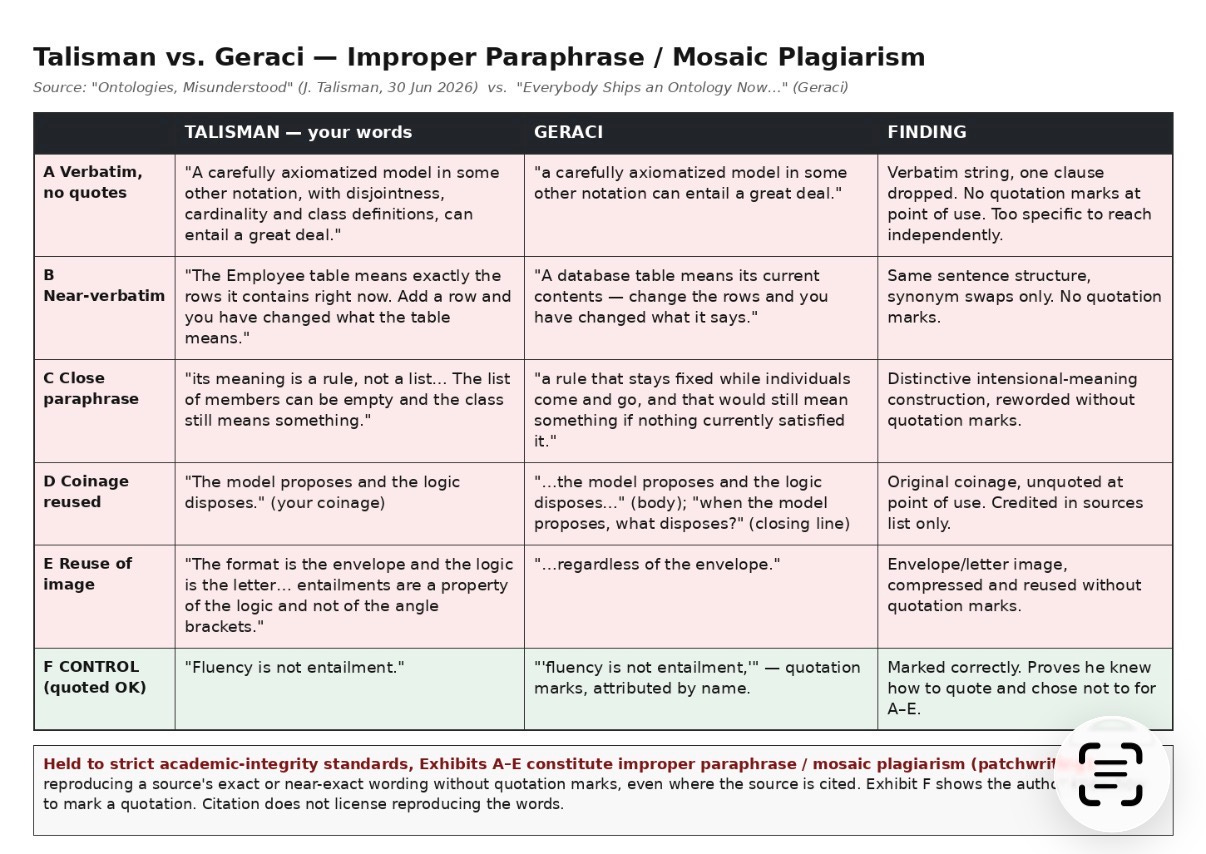
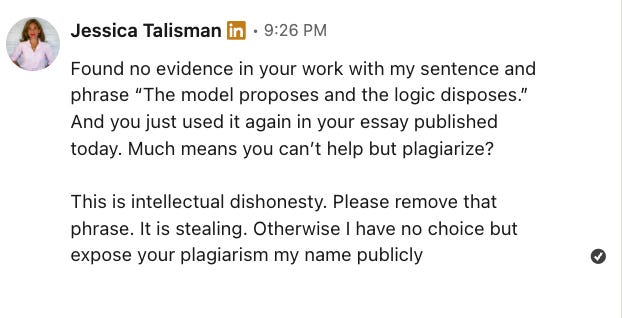
As for plagiarism, don’t do any of this. Not because you’ll get caught because you probably won’t. The truth is this has to do with knowledge and it’s the only intellectual infrastructure we’ve got. And if you are caught plagiarizing, don’t have AI write your response to the accusations because it only proves that you really don’t care about the ideas and words you are stealing.
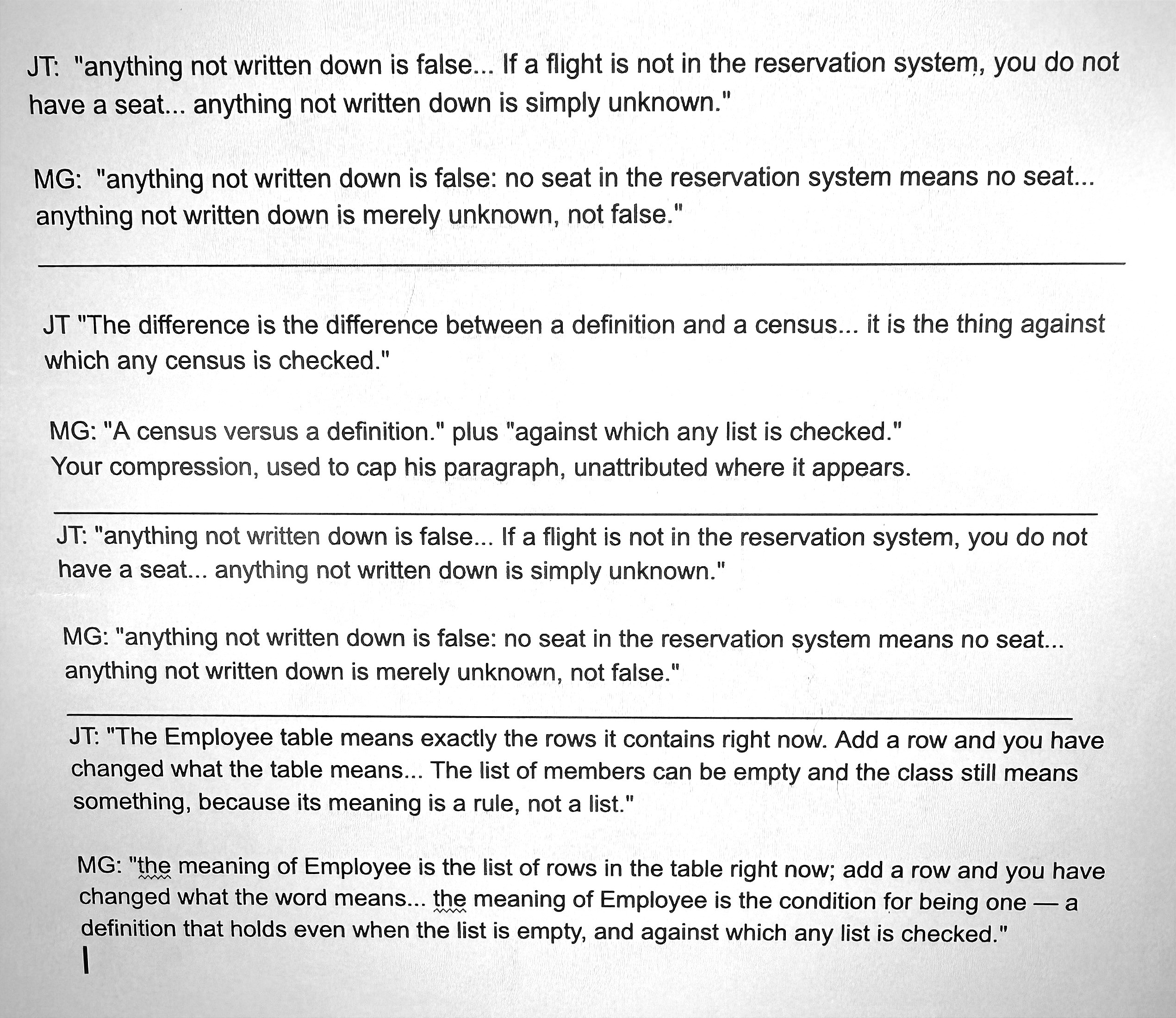
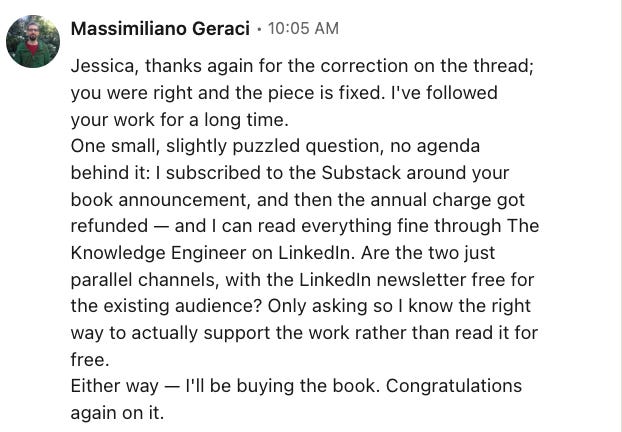
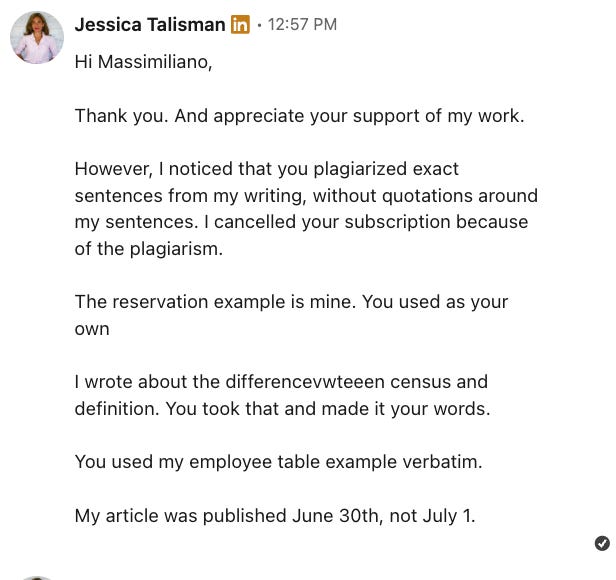
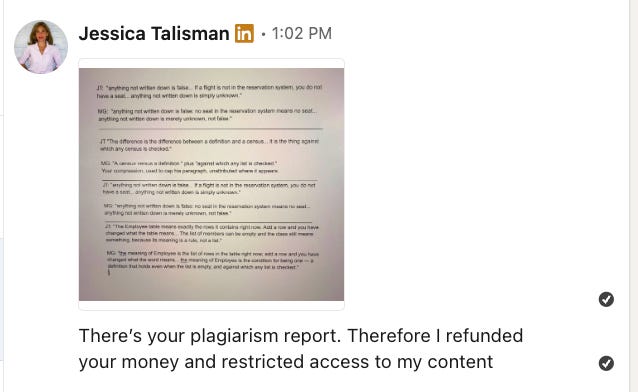
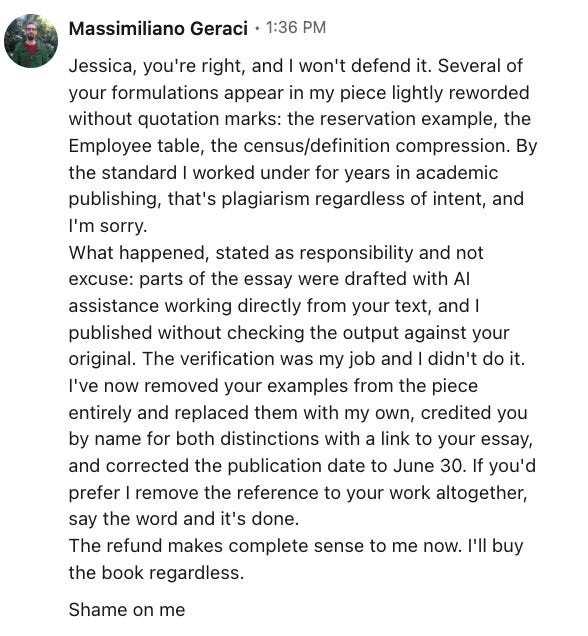
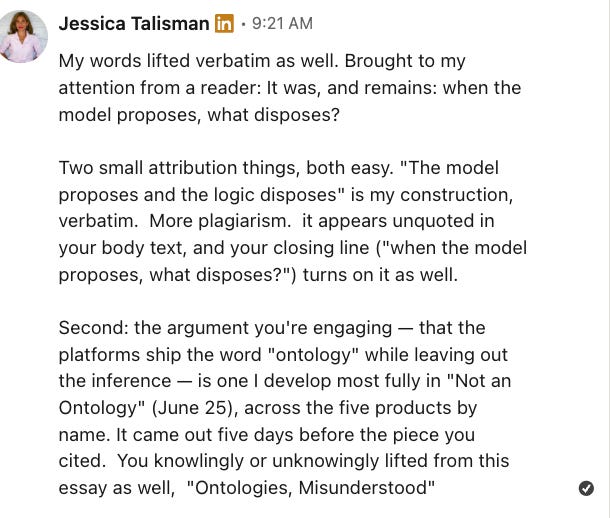
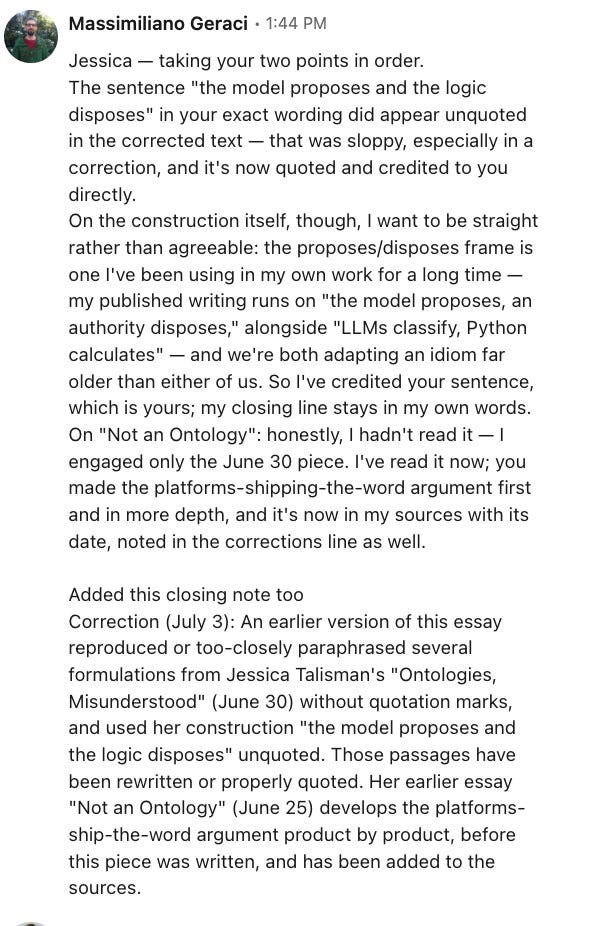
Here’s the original article that was plagiarized. The plagiarizer’s AI generated knockoff received more traction on LinkedIn than the author’s original plagiarized content. The plagiarizer has zero expertise in ontologies and knowledge graphs, with a professional resume that includes copy editor content marketing specialist and SEO specialist. The original article, mine, was written by a higher degreed and seasoned information scientist, librarian, taxonomist, ontologist and knowledge graph expert. The public knows no different. So for every person and account that reshared and reposted the plagiarized work, do better and do not support this behavior.

A note on “epistemic squatting”: I use the phrase here in my own sense — occupying intellectual territory someone else cleared and defending it as one’s own. Others have used the phrase differently elsewhere.
Footnotes (for what it’s worth)
Fishman, T. (2009). “’We know it when we see it’ is not good enough: toward a standard definition of plagiarism that transcends theft, fraud, and copyright.” 4th Asia Pacific Conference on Educational Integrity. https://www.bmartin.cc/pubs/09-4apcei/4apcei-Fishman.pdf
TRIPS Agreement, Art. 9(2), https://www.wto.org/english/docs_e/legal_e/27-trips_04_e.htm; Baker v. Selden, 101 U.S. 99 (1879).
17 U.S.C. §107, https://www.law.cornell.edu/uscode/text/17/107
Lawrence Lessig, Remix (2008); Creative Commons founded 2001; “Read/Write” vs “Read/Only” culture. https://lessig.org/product/remix/ ; https://en.wikipedia.org/wiki/Remix_culture
Kirby Ferguson, Everything Is a Remix, “copy, transform, combine.” The four-part series launched in 2010 and was released in completed form in 2014 (a “Remastered”/”Remixed” version followed). Ferguson explicitly distinguishes legitimate remix from mere copying: “copying without altering anything is stealing and is damaging to human creativity, but copying to transform it into something new is the most natural thing that humans do.” https://www.everythingisaremix.info/articles/copy-transform-combine ; https://en.wikipedia.org/wiki/Kirby_Ferguso
All six current CC licenses require attribution (BY); only CC0 waives it and is a public-domain dedication, not a license. Creative Commons: “There are six different license types … Credit must be given to you, the creator.” The five license combinations lacking the BY clause were retired “because 98% of licensors requested attribution … This leaves six regularly used licenses plus the CC0 public domain declaration.” https://creativecommons.org/share-your-work/cclicenses/ ; https://creativecommons.org/faq/ ; https://en.wikipedia.org/wiki/Creative_Commons_license Creative Commons
Campbell v. Acuff-Rose Music, Inc., 510 U.S. 569 (1994) — parody as transformative fair use; 2 Live Crew’s “Pretty Woman.” Unanimous decision holding a commercial parody may be fair use; source of the “the more transformative the new work, the less will be the significance of other factors, like commercialism” formulation. https://supreme.justia.com/cases/federal/us/510/569/ ; https://www.law.cornell.edu/supct/html/92-1292.ZS.html
Andy Warhol Foundation for the Visual Arts, Inc. v. Goldsmith, 598 U.S. 508 (2023), 7–2, Sotomayor, J. “Although new expression may be relevant to whether a copying use has a sufficiently distinct purpose or character, it is not, without more, dispositive of the first factor.” (Opinion of the Court, slip op. at 12.) – “If an original work and a secondary use share the same or highly similar purposes, and the secondary use is of a commercial nature, the first factor is likely to weigh against fair use, absent some other justification for copying.” (slip op. at 19–20.) – Also useful (and deliciously on-theme): the Court observed that of the memorial magazine covers, “all of them (except Condé Nast) credited the photographer.” (slip op. at 7.) – And on the derivative-works limit: “the degree of transformation required to make ‘transformative’ use of an original must go beyond that required to qualify as a derivative.” (slip op. at 16.) Caveat: the ruling addressed only the first fair-use factor and the specific commercial licensing of “Orange Prince” to Condé Nast; the Court expressly declined to opine on the creation or display of the original works. https://www.supremecourt.gov/opinions/22pdf/21-869_87ad.pdf ; https://supreme.justia.com/cases/federal/us/598/21-869/
“Freebooting” — the term. Coined by Australian filmmaker/podcaster Brady Haran on the Hello Internet podcast (episode 5, “Freebooting,” released Feb 26, 2014), co-hosted with CGP Grey; Haran introduced the word because he found “copyright infringement” an inadequate/”soft” term for the practice. (Haran told Slate he chose it from 19th-century British slang for sea piracy.) Popularized by Destin Sandlin’s Smarter Every Day video (Jan 19, 2015 — “over 420,000 views and 3,300 comments in the first four months”) and by Kurzgesagt’s video (Nov 2015). Definition: downloading a video (typically from YouTube) and natively re-uploading it elsewhere (typically Facebook) without permission, to capture the engagement/reach. https://knowyourmeme.com/memes/freebooting ; https://slate.com/technology/2015/07/freebooting-stolen-youtube-videos-going-viral-on-facebook.html ; https://www.tubefilter.com/2015/11/10/kurzgesagt-vs-facebook-freebooting/
TikTok duet/stitch is a license between the user and the platform, not from the original creator. TikTok’s Terms grant TikTok (not other users) “a non-exclusive, royalty-free, transferable, sub-licensable, worldwide license,” and the license to other users flows only through platform settings (Duet, Stitch, download/share) that the poster controls — it does not authorize off-platform reuse. https://www.tiktok.com/legal/page/eea/terms-of-service/en ; https://support.tiktok.com/en/account-and-privacy/account-privacy-settings/stitch
Copyleaks, “Nearly 60% of GPT-3.5 Outputs Contained Plagiarism” (Feb. 2024), https://copyleaks.com/about-us/media/copyleaks-research-finds-nearly-60-of-gpt-3-5-outputs-contained-some-form-of-plagiarized-content
The New York Times Co. v. Microsoft Corp. et al., No. 1:23-cv-11195 (S.D.N.Y.), Opinion and Order, Apr. 4, 2025.
Baron, P. (2024). “Weaponising QuillBot to escape plagiarism allegations: Paraphrasing as a tool for concealment.” Scholarship of Teaching and Learning in the South, 8(2).
ORI Policy on Plagiarism, https://ori.hhs.gov/ori-policy-plagiarism; 42 C.F.R. Part 93.
Berne Convention, Art. 6bis, https://www.law.cornell.edu/treaties/berne/6bis.html
about me. I’m a Semantic Engineer, Information Architect, and knowledge infrastructure strategist dedicated to building information systems. With more than 25 years of experience in enterprise architecture, e-commerce content systems, digital libraries, and knowledge management, I specialize in transforming fragmented information into coherent, machine-readable knowledge systems.
I am the founder of the Ontology Pipeline™, a structured framework for building semantic knowledge infrastructures from first principles. The Ontology Pipeline™ emphasizes progressive context-building: moving from controlled vocabularies to taxonomies, thesauri, ontologies, and ultimately fully realized knowledge graphs.
Professionally, I have led semantic architecture initiatives at organizations including Adobe, where I architected an RDF-based knowledge graph to support Adobe’s Digital Experience ecosystem, and Amazon, where I worked in information architecture and taxonomy. I am also the founder of Contextually LLC, providing consulting and coaching services in ontology modelling, NLP integration, knowledge graphs and knowledge infrastructure design.

I am also a curriculum designer, teacher and founder of The Knowledge Graph Academy, a cohort-based educational program designed to train and up skill future semantic engineers and ontologists. The Academy is the the perfect balance of ontology and knowledge graph theory and practice, preparing graduates to confidently work as ontologist and semantic engineers.
An educator and thought leader, I publish regularly on my Substack newsletter, Intentional Arrangement, where my writing frequently explores the relationship between semantic systems and AI.
For more than I a year, I have been working on a book titled, Ontology Pipeline. The book teaches how to build:
⚪️ controlled vocabularies
⚪️ taxonomies
⚪️ metadata schemas
⚪️ thesauri
⚪️ ontologies
⚪️ knowledge graphs
It’s now official! The book will be published by Technics Publications and will be available September/October, 2026.
This was no small feat but made easier thanks to Substack readers. I tested content and tutorials on my Substack, using reader feedback to finetune the how-tos while bringing readers along on my writing journey.
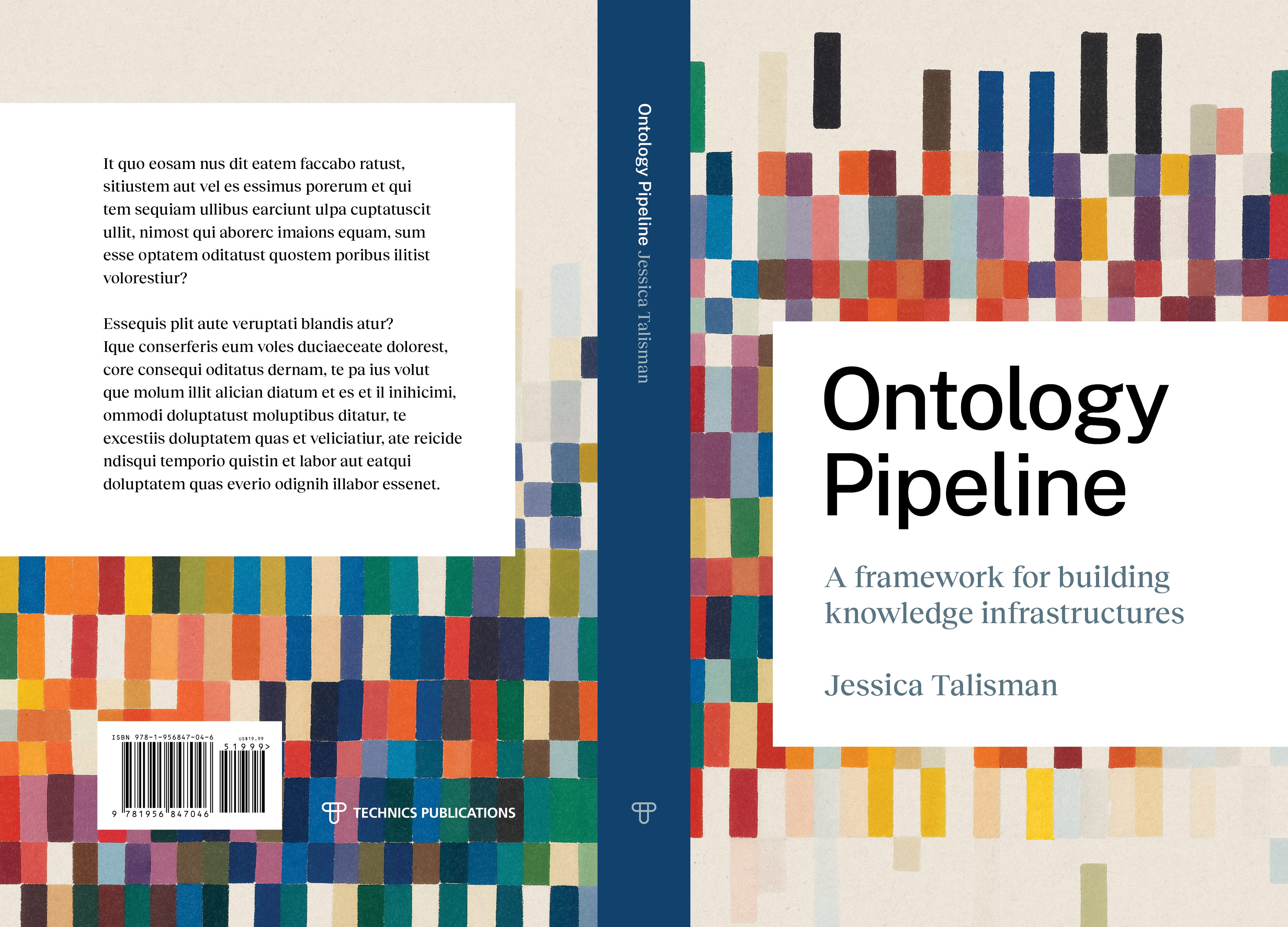
You can preorder the book from the publisher’s website here.
I will continue to publish how-tos and deeper thinking pieces as I work towards my 2nd book, Intentional Arrangement. This one will be about knowledge management and knowledge infrastructures.
This happened to me with my research papers. I saw a few LinkedIn posts (from people I knew) mimic their ideas, and when I spoke with them, they became very defensive. I had not even accused them (just said how similar they looked, and attribution would be nice if they took their ideas further). But some of the wording and cadence were obvious. They never spoke to me again, which is ok; they still can't come up with new ideas on their own....
A few weeks ago I wrote a little blurb — a very compressed conclusion of a long thought process. Recently, I read a big expansion on my conclusion. This is not the first time this happened.
I don’t dismiss the possibility that 2 different people reach the same conclusion. It’s done so expertly, trying to prove it would be a ‘witch hunt’.
Ultimately, when something is shared public, it’s dated; that is always the evidence of who said it first.