

The Context Gap
What We Lost When We Sent the Work Away

A New Name for an Old Wound
In December 2025, Foundation Capital published an essay titled “AI’s Trillion-Dollar Opportunity: Context Graphs,” which has since become one of the most-discussed pieces in enterprise AI. The thesis holds that agents are hitting a wall that governance alone cannot solve, and the wall is not missing data — it is missing decision traces. Foundation Capital proposes the “context graph” as the answer, characterized as a living record of decision traces stitched across entities and time, where precedent becomes searchable. Within a month, Dharmesh Shah of HubSpot was calling context graphs “a system of record for decisions, not just data,” Aaron Levie of Box declared we had entered “the era of context,” and Arvind Jain of Glean wrote that the concept “finally has a name.”
In other words, a rebranding of a discipline lost.
Allow me a moment of professional indignation. The thing being so deftly branded is process knowledge, procedural knowledge and institutional memory, core tenants of library and information science and the knowledge management. And the organization of information and knowledge is exactly what American and Western companies systematically dismantled over decades of outsourcing. 2026 is the year venture capital rebranded the absence of knowledge management as a trillion-dollar opportunity.
I want to be careful here as the Foundation Capital authors are not wrong about the problem. They have correctly diagnosed that enterprise AI agents fail in the gap between what happened and why it was allowed to happen — the gap between systems of record and the reasoning that connects inputs to outputs. They are also correct that “the context that justified [a decision] isn’t preserved,” that “you can’t replay the state of the world at decision time,” and that without that capacity, agents inherit their parent systems’ blind spots. This is true. It is also exactly what knowledge engineers, ontologists and information architects have been saying for more than forty years.
There is a deeper irony here. Foundation Capital observes that “capturing decision traces requires being in the execution path at commit time, not bolting on governance after the fact.” Quite right. But who removed themselves from the execution path? Western companies did, deliberately, when they outsourced the execution. The “decision traces” the industry is now scrambling to capture accounts for the traces that were never captured in the first place — because the work that would have generated them was sent to Shenzhen, Bangalore and Manila, and the sociotechnical ethos that would have documented them was dismantled along with the apprenticeship systems and communities of practice that sustained it.
Context graphs are not a new invention. They are a market response to a self-inflicted wound. The thing being sold as the next platform shift is the recovery of process knowledge that was treated as boring stuff, sent away, and lost. Foundation Capital itself acknowledges the analog when they compare the opportunity to process mining, where companies like Celonis built businesses out of helping enterprises see workflows they had ceased to understand. The pattern is the same. We outsourced the work and lost the procedural knowledge.
This is the convenience trap at organizational scale. Decisions to outsource seems locally rational — lower cost, cleaner balance sheets, focused “core competencies.” The aggregate consequence emerges as the erosion of the knowledge infrastructures necessary to operate the systems we nominally own. Now we are told that purchasing context graph software from a verticalized startup will close the gap. Perhaps this is true. But software cannot reconstitute communities of practice or regenerate apprenticeship lineages. Software cannot retroactively document the forty years of operational decisions.
What Foundation Capital calls a context graph is, in the disciplinary vocabulary of information science, a procedural knowledge graph grounded in formal ontologies, with provenance, temporal validity, entity resolution and controlled vocabularies underneath. We already have the methods. PROV-O models provenance. SKOS handles vocabulary control. OWL provides the reasoning structures. The toolkit predates the marketing. What is missing is not tooling but the recognition that this is a knowledge management problem, requiring knowledge engineers, information architects, ontologists and the cultural conditions that allow their work to be valued and sustained as part of the operational infrastructure.
The Foundation Capital thesis is therefore best read not as a revelation but as a confession. The market is admitting, in the language it understands, that the operational knowledge required to run modern enterprises has gone missing. The “context” being chased is the work that was sent away and outsourced in favor of products, features, solutions and marketing magic. The graph being built is an attempt to reconstruct, from telemetry and decision traces, what should have been captured natively through documentation, apprenticeship and disciplined knowledge engineering — and would have been, in an engineering state that had not transformed itself into a lawyerly society.
That the industry needed a venture capital essay to name this problem tells us how far the disciplinary erosion has gone.
There is a darker chapter in this story that must be told and merits a retrospective, in order to understand the domain of process and procedural knowledge. Why every organization is scrambling to wrap their arms around process knowledge, now known as context graphs, with the objective of recording, documenting and eliciting meaning from decision traces and execution traces. For the past four decades, American and Western companies have systematically outsourced not just manufacturing work, but the entire sociotechnical ecosystem that generates, maintains and transmits process knowledge. What began as a rational economic decision to reduce costs became a wholesale abandonment of the cultural and institutional practices that make process knowledge legible, valuable and actionable. We outsourced what we dismissively called “the boring stuff”—the manufacturing, the execution, the grunt work—without understanding that we were outsourcing the very capacity to understand how things get built.
This essay examines this history of outsourcing through the lens of process knowledge management. It argues that what was lost was not simply jobs or manufacturing capacity, but something more fundamental: the sociotechnical ethos that treated documentation, apprenticeship and the systematic capture of procedural knowledge as integral to the work of building things, not as an afterthought or administrative burden.
When we sent manufacturing to China, India and the Philippines, we divested from the opportunity to learn, iterate, fail and improve. We eliminated critical feedback loops, a requisite for capturing and documenting procedural knowledge. We dissolved communities of practice that essential sources for process knowledge. And crucially, thanks to gapping holes in the end-to-end process knowledge fabric, we stopped investing in the knowledge infrastructure required to capture and maintain our understanding of how complex systems actually work.
The Great Unbundling
The story begins in the 1880s and accelerates through the 1990s and 2000s with what business strategists celebrated this as “disaggregation” and “core competency focus.” Companies would concentrate on their “core” activities—typically defined as customer-facing brand management, product design and strategic decision making—while outsourcing everything else. Manufacturing was among the first to go, particularly in electronics, textiles and eventually more sophisticated dry and wet goods.
But the outsourcing movement didn’t stop at physical manufacturing. By the early 2000s, a new category emerged: Knowledge Process Outsourcing (KPO). Unlike traditional Business Process Outsourcing (BPO), which focused on routine transactional work like call centers and data entry, KPO involved outsourcing knowledge-intensive activities that required specialized expertise and analytical skills1. Legal research, financial analysis, market research, engineering design, pharmaceutical R&D, the very activities that generated and required deep process knowledge, were increasingly sent offshore to providers in India, the Philippines and China.
The logic made sense. Why maintain expensive in-house capabilities when you could access global talent pools at a fraction of the cost? Why invest in training and developing institutional memory when specialized KPO firms could provide on-demand expertise? The KPO industry exploded. By 2006, India’s KPO sector alone was estimated at $1.5 billion, growing to over $12 billion by 2015.2 The Philippines positioned itself as a hub for “non-voice” back office services. China became the world’s factory, but increasingly also its laboratory for manufacturing process innovation.
What went largely unexamined was what happened to process knowledge when these activities migrated. The assumption was that process knowledge could be cleanly separated from execution—that “knowing how” could remain in Western headquarters while “doing what” happened elsewhere. This assumption proved catastrophically wrong. Look no further than current struggles in developing knowledge infrastructures in technology organizations and massive failures of agentic AI systems. (see my series, “Why AI Isn’t Autonomous (Yet)”).

Shenzhen and Process Knowledge
To understand what was lost, we must first understand what was gained. Dan Wang’s Breakneck provides the most compelling account of how China, and Shenzhen in particular, transformed manufacturing offshoring into a comprehensive accumulation of process knowledge.3 I adore Wang’s book so much, I have read it twice, and highly recommend.
Shenzhen first become a place where Western designed products were assembled. The city evolved into what Wang calls a “community of engineering practice” where tacit knowledge about how to actually build complex electronics circulates through dense networks of workers, engineers, entrepreneurs and suppliers. Someone might work at an iPhone plant one year, move to a rival phone maker the next and then start their own drone company, due to a rich sociotechnical ethos invested in process knowledge.4 This creates a positive feedback loop of process knowledge accumulation, synthesis and codification. Ultimately, process and procedural knowledge entrenches embodied understandings of what works, what fails, how to troubleshoot, how to improvise, how to improve and optimize.
This is process knowledge in its richest form: a living ecosystem where knowledge moves through human relationships, apprenticeships, formal and informal collaborations and the constant iteration between design and manufacturing. And this ecosystem extends across physical and digital worlds as that is the very essence of knowledge, a real manifestation of human-in-the-loop (HITL).
When a Shenzhen engineer encounters a problem, they have immediate access to a community that has solved similar problems. They can walk down the street and consult with specialists in adhesives, specialists in precision machinery, specialists in quality control. The knowledge exists both in documented procedures and in the practiced hands and pattern-recognition wisdom of experienced workers.
In 1890, economist Alfred Marshall wrote about the social and economic consequences of outsourcing skills and processes in his 1890, in his book Principles of Economics, stating, “When an industry has thus chosen a locality for itself, it is likely to stay there long: so great are the advantages which people following the same skilled trade get from near neighbourhood to one another. The mysteries of the trade become no mysteries; but are as it were in the air, and children learn many of them unconsciously.” 5 Indeed, skills, trades and knowledge are entangled, becoming deeply embedded in human identities and community identities, and therefore part of a societies brain trust of knowledge.
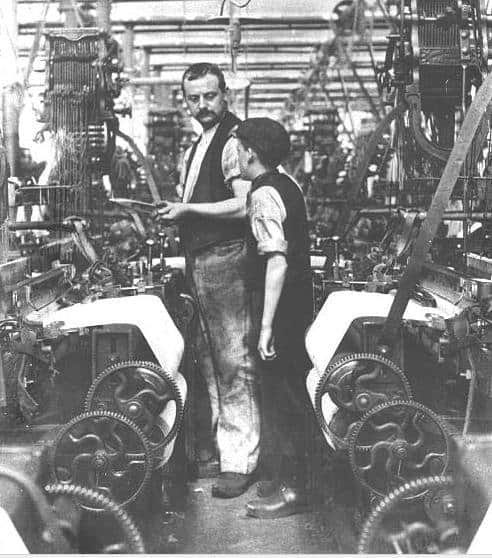
Shenzhen represents Marshall’s industrial skills and trades hypotheses at unprecedented scales. China now employs over 100 million people in manufacturing—eight times the numbers employed United States.6 These imbalances are significant, as aside from the obvious, such as labor capacity for skilled trades related to manufacturing, the process knowledge associated with how to build and maintain outsourced systems resides in the heads and hands of communities of people and plants and systems responsible for manufacturing.
Because many of the outsourced physical components and digital systems tend to be related to each other, entire networks of process knowledge are concentrated within communities such as Shenzhen. When you have that many people solving related problems, process knowledge compounds because most innovation is synthetic hybridization, not mutational deviation. Improvements propagate quickly. New capabilities emerge from unexpected combinations. With process and procedural knowledge baked into the ethos of a society, standardization of procedures support progress, and from these roots, innovation accelerates, built on the backs of reliable, repeatable procedures and workflows.
From Engineering State to Lawyerly Society
What happened in the United States during this same period? Wang argues that America transformed from an “engineering state” to a “lawyerly society”—a shift with profound implications for process knowledge management.7 Follow along, as I lay out how this came to be.
In an engineering state, the cultural and institutional focus is on building, optimizing and documenting how things work. Engineers value process knowledge because they understand that it’s the substrate for continuous improvement. The ethos becomes iterative and standardized: build something, see how it fails, document the failure, redesign, build again. Process knowledge is valued culturally because the people doing the work understand that today’s insights become tomorrow’s foundation.
But starting in the 1960s, America’s elite shifted. Legal expertise became ascendant. Five out of the last ten U.S. presidents attended law school. At least half of Congress holds law degrees, while barely a handful studied science or engineering.8 The priorities of this lawyerly society turned toward litigation, regulation and oversight—legitimate concerns, but ones that treat process knowledge very differently than an engineering culture does.
Lawyers are trained to manage risk and are not primarily trained to optimize processes, safe for legal libraries. They often create policies to limit document retention, to create legal defensibility and are not primarily concerned with knowledge accumulation or transfer. In fact, their usual tendency is to avoid both. The kind of knowledge they value is precedent-based and tends towards the adversarial.
When lawyers run organizations, the impulse is to standardize procedures for compliance and risk-mitigation purposes, such as not retaining records of technology and process invention, for fear of disclosure in intellectual property disputes. However, capturing the rich tacit knowledge is what makes procedures actually work in practice. We often see this reflected in Governance programs, where the primary focus is on compliance, not things like data quality, information and knowledge management.
This cultural shift coincided with—and likely accelerated—the outsourcing wave. When American companies decided what to keep and what to send offshore, they kept the functions that their leadership understood and valued: engineering design, legal, financial structuring, brand management, strategic planning. The surface stuff and things that matter for go-to-market strategies. C-suite execs and investors sent away the “execution” or “boring stuff”, not recognizing that execution is where process knowledge lives.
The erosion was insidious because it happened gradually. First, companies stopped investing in manufacturing facilities. Then they stopped training manufacturing engineers. Then they stopped maintaining the institutional knowledge about how their own products were actually made. Within a generation, American companies found themselves in the absurd position of designing products they didn’t know how to build, reliant on offshore partners who held all the tacit, explicit and implicit knowledge about what how to build the widget.
Death of Apprenticeship and Institutional Memory
Perhaps the most devastating casualty of outsourcing was the collapse of apprenticeship systems and the erosion of institutional memory. In part, process knowledge is transmitted through apprenticeship, the pairing of experienced practitioners with novices, in contexts where tacit knowledge can be absorbed through observation, practice and guided correction. That is, the trades and skills related to parts, components and systems.
American manufacturing once had robust apprenticeship traditions. Young workers learned from older ones. Knowledge passed from generation to generation of practitioner. Companies invested in training because they expected workers to stay, and workers stayed because companies invested in them. This created a virtuous cycle where process knowledge deepened over time.
Outsourcing shattered this cycle. When manufacturing left, apprenticeships went with it. Why invest in training manufacturing engineers when you don’t manufacture? Why develop institutional memory about production processes when production happens in someone else’s facility on the other side of the world?

The effects rippled beyond manufacturing. Henry Farrell, writing about Dan Wang’s work, notes that process knowledge isn’t just about factory floors—it’s about understanding “how different operations benefit or conflict with one another.”9 When you remove large chunks of your value chain and send them away because they seem unprofitable on their own, you lose the ability to see and optimize the system as a whole. You fragment your understanding of how your own business actually works.
Bologna’s packaging valley, which Farrell studied in the late 1990s, illustrates what America lost.10 Small manufacturers of packaging machinery clustered together, each specializing in particular aspects of a complex process. Workers routinely moved between companies, carrying knowledge with them. Founders had typically apprenticed at other firms before starting their own. This created a dense network where process knowledge circulated and compounded.
By the 2000s, even Bologna was struggling. Firms complained they couldn’t attract young people to apprenticeships—everyone wanted to study media relations instead. Sound familiar? The cultural valuation of different forms of knowledge had shifted. “Boring” technical work was seen as low status compared to creative or strategic work. But that “boring” work was precisely where process knowledge lived.
Why We Stopped Documenting
Here we must return to a crucial distinction introduced earlier in this series: the difference between process knowledge and procedural knowledge. Process knowledge is the raw form—tacit, explicit, implicit—the living understanding of how work happens. Procedural knowledge is process knowledge that has been formalized, encoded and represented through taxonomies, ontologies and structured metadata.
The transformation from process knowledge to procedural knowledge requires significant investment. Someone must observe work practices, interview experts, extract tacit understanding and encode it in formal representations. This is painstaking knowledge engineering work that organizations must resource and value.
When American companies outsourced production, they also outsourced the motivation to create procedural knowledge. If you don’t do the work yourself, why invest in documenting how it’s done? The assumption was that the KPO provider or offshore manufacturer would handle their own documentation. And they did—but that documentation stayed with them. It became their intellectual property, their competitive advantage, their process knowledge.
American companies retained design specifications and product requirements—the what to build. But the how to build it—the procedural knowledge of actual manufacturing processes—migrated offshore along with the work itself. This created a devastating asymmetry. Chinese manufacturers knew how to make American products, but American companies increasingly didn’t know how their own products were made.
This dearth in manufacturing know-how affected every dimension of process knowledge. The pattern has repeated across industries: outsource the execution, lose the procedural knowledge, become dependent on external providers who now hold the keys to your own operations. Companies became what supply chain theorists call “hollow corporations”—shells that own brands and customer relationships but have lost the operational knowledge required to actually deliver value.
Sociotechnical Ethos
While we can grieve the loss of knowledge, of greater concern is the loss of the sociotechnical ethos, that treated documentation and knowledge capture as integral to craft. It used to be that in engineering cultures, documenting process knowledge was part of the work. When you solve a problem, you write it down—not because someone made it a compliance requirement, but because you understand that future-you or future colleagues will face similar problems and benefit from your insights.
Call me out on this claim, but the lack of documentation in our engineering systems is mind blowing, making it difficult to manage engineering systems with the constant shifts in headcount.
This ethos is some thing bigger than a mandate or buying a software solution. In other words, a vendor cannot fix your knowledge culture. Understanding the value of knowledge emerges from communities of practice where knowledge sharing is normative, where institutional memory is valued, where there’s an expectation of continuity and mutual obligation between generations of practitioners.
Historically and still today, outsourcing disrupts these communities. When work moves to contract workers or external providers, the social contract changes. Why would a contractor invest in building institutional memory for a client if the contractor is an outsider and there is no mandate or standard of care for knowledge? Why would a KPO firm share its hard earned procedural knowledge with clients when that procedural knowledge is the essence of the KPO’s intellectual property and essentially, the market differentiator in service value?
The traditional IT industry faced this exact problem with offshoring. Companies outsource development to save costs, only to discover they’ve created a knowledge vacuum. When the offshore team turns over (as contractors inevitably do), the new team has to rebuild understanding from scratch because procedural knowledge hadn’t been properly captured and embedded within knowledge repositories and systems. Projects that should have taken months take years. Bugs that had been solved, reappeared. Technical debt compounds because no one maintains the institutional memory of architectural decisions and their rationales.
Process Knowledge is Foundational Infrastructure
We are now facing the consequences of these decades of outsourcing and knowledge loss. As Part I of this series argued, AI systems—particularly agentic AI systems that need to execute multi-step processes—require rich procedural knowledge to function effectively. They need to understand not just what the desired outcome is, but how to achieve it: what steps are required, in what order, under what conditions, with what resources,and how to handle exceptions.
McKinsey’s research on agentic AI deployments reveals a crucial insight: success comes not from the agent itself, but from reimagining entire workflows—the integration of people, processes and technology. Hate to say it, but McKinsey is right on the money here.11 But here’s the problem: how can American companies reimagine workflows they no longer understand? How can they design effective AI agents when they’ve lost the procedural knowledge about how their own operations actually function? And for that matter, how can organizations build the sociotechnical ethos and related disciplines if they largely don’t give a shit about knowledge management?
Companies are discovering they can’t simply prompt an LLM to “optimize manufacturing” when they lack the formalized process knowledge to ground the AI’s reasoning. They can’t deploy agents to handle complex knowledge work when the procedural knowledge about how that work happens exists only in the tacit understanding amongst an overworked and under appreciated workforce. Many organizations report using generative AI extensively, yet see no significant bottom-line impact—a phenomenon McKinsey researchers call the “gen AI paradox.” 12
This is the bitter irony: just as AI technology has created an urgent need for high-quality procedural knowledge, American organizations find themselves impoverished in exactly that resource. They spent forty years outsourcing the activities that generate process knowledge and abandoning the practices that would have captured it. Now they need it desperately, and it’s gone. And organizational cultures have failed to build knowledge management practices, the very thing that encodes institutional memory.
China, meanwhile, has both the process knowledge and the cultural ethos to leverage it. When Chinese companies deploy AI agents in manufacturing, they have rich procedural knowledge to draw upon—knowledge embedded in Shenzhen’s engineering communities, encoded in the institutional memory of companies that actually make things, embodied in workers who understand production processes intimately.
The competitive implications are stark. Farrell notes that if the U.S. and China ended up in confrontation, “which would you prefer to dominate in: software like the U.S., or hardware like China?” Wang’s answer: “algorithms on their own don’t win battles.”13 Physical production capacity, backed by deep process knowledge, trumps abstract optimization capabilities and go-to-market fluff.
Rebuilding Process Knowledge Infrastructure
Can American organizations recover what was lost? The honest answer is: not easily, and not quickly. Process knowledge compounds over time through communities of practice. You can’t simply hire it back or reverse the loss. The networks are gone. The apprenticeship structures are gone. The sociotechnical ethos is gone.
But we can begin to rebuild. As long as we can pause the prompts and stop the hand waving related to the mighty, ubiquitous concept, context. Because process knowledge is the root of workflows and the context we actually need.

It starts with acknowledging the deficit. That organizations must recognize that they have a process knowledge problem, not just a cost or efficiency problem. They need to audit what procedural knowledge they actually possess versus what they need, identifying the gaps and dependencies.
Next, organizations must reinvest, or should I say invest, in knowledge infrastructure. This means hiring knowledge engineers, information architects and ontologists—people who can systematically capture, organize and encode process knowledge. It means building the semantic ecosystems described in Part I: controlled vocabularies, taxonomies and ontologies that can represent procedural knowledge formally.
For outsourced processes and process knowledge coverage gaps, organizations must identify processes that are strategically important and knowledge intensive. Organizations must make concerted efforts to capture outsourced process knowledge, and codify procedural knowledge. I am in no way proposing a nationalist economic plan. We simply must ensure that we have access to the process knowledge required to manage and improve operations.
To substantiate the sociotechnical ethos that values process knowledge, we must rebuild apprenticeship and knowledge sharing practices. This requires major cultural changes; things like valuing documentation and knowledge transfer, creating time and space for experienced practitioners to mentor novices, establishing norms where sharing procedural knowledge is expected and rewarded.
As part of the knowledge management ethos and in the spirit of building institutional memory, we must structure relationships to facilitate knowledge transfer rather than knowledge hoarding. We talk a whole lot about silos and make sweeping statements about which team should own what operational muscle, which only reinforces silos. Enough. Require explicit knowledge management systems and deliverables. And in the spirit of sharing, invest in bi-directional learning. Treat providers as long-term partners whose success depends on your mutual knowledge accumulation.
Finally, design for knowledge capture from the start. When deploying new technologies like agentic AI, treat procedural knowledge creation as a primary objective, not a byproduct.
Build systems that capture rationale, document decisions and create explicit representations of how processes work. For prompts, build prompt libraries. For context windows, build ways to codify and condense knowledge. For MCP and A2A integrations, build central registries and common pathways. Make the entire AI proposition about process, procedure and knowledge. Why? Because a workflow is process, procedure and knowledge, when we we strip AI out of this statement. As IBM14 defines it ,
A workflow is a system for managing repetitive processes and tasks which occur in a particular order. They are the mechanism by which people and enterprises accomplish their work, whether manufacturing a product, providing a service, processing information or any other value-generating activity.
Conclusion
The outsourcing of process work over the past four decades represents one of the great unforced errors in American business history. What seems like rational cost optimization is actually the dismantling of knowledge infrastructures, that took generations to build. We exported the capacity to understand how complex systems work, the sociotechnical practices that make process knowledge legible and actionable, and the cultural ethos that treats documentation and knowledge transfer as integral to craft.
The consequences are obvious, as we clamor around LLMs, each injecting our own ideas and versions of context, at runtime. As AI systems increasingly require rich procedural knowledge to function effectively, organizations find themselves impoverished in exactly that resource. Meanwhile, we do have working examples where countries - China especially - have built robust communities of engineering practice, where process knowledge circulates and compounds. And as is true in the case of China, knowledge is fundamental to skills, trades, processes and innovation.
The path forward requires acknowledging a hard truth: you cannot manage what you do not understand, and you cannot understand what you have not bothered to document and internalize in knowledge management systems. Process knowledge management is foundational for AI dependent systems, the human skills economy, institutional memory and innovation. Organizations that recognize this and invest accordingly will build competitive advantages that prove durable. Those that don’t will find themselves increasingly dependent on other systems, to account for the procedural knowledge they need but no longer have. And that procedural knowledge does not live in Wikipedia nor can it be manifested by AI. We can continue to treat process knowledge as “boring stuff” unworthy of serious investment, or we can recognize it as the strategic asset, worthy of our collective attentions.
This is the third of four parts about process knowledge, ontologies and semantic architectures. Part I of the Process Knowledge Management series can be found here:
Footnotes
1 “Knowledge process outsourcing,” Wikipedia, accessed December 2025, https://en.wikipedia.org/wiki/Knowledge_process_outsourcing. KPO is defined as “the outsourcing of core information-related business activities which are competitively important or form an integral part of a company’s value chain” requiring “advanced analytical and technical skills as well as a high degree of specialist expertise.”
2 Ibid. The Indian National Association of Software and Service Companies (NASSCOM) estimated the total market size of the KPO sector in India in 2006 to be $1.5 billion, with projections indicating the worldwide KPO industry would reach about $17 billion by 2015, of which $12 billion would be outsourced to India.
3 Dan Wang, Breakneck: China’s Quest to Engineer the Future (New York: W.W. Norton & Company, 2025).
4 Quoted in Arnold Kling, “What China Knows,” Econlib, October 6, 2025, https://www.econlib.org/library/columns/y2025/klingbreakneck.html. Wang writes: “Shenzhen is a community of engineering practice where factory owners, skilled engineers, entrepreneurs, investors, and researchers mix with the world’s most experienced workforce at producing high-end electronics.”
5 Alfred Marshall, Principles of Economics (London: Macmillan, 1890), Book IV, Chapter X. Quoted in Kling, “What China Knows.”
6 Wang, Breakneck, p. 80. Quoted in Kling, “What China Knows”: “Overall, China’s manufacturing workforce employs more than a hundred million people, around eight times that of the United States.”
7 Wang, Breakneck, p. 2. Wang writes: “China is an engineering state, which can’t stop itself from building, facing off against America’s lawyerly society, which blocks everything it can.”
8 Ibid., pp. 4-5. Wang notes: “Five out of the last ten presidents attended law school. In any given year, at least half the US Congress has law degrees, while at best a handful of members have studied science or engineering.”
9 Henry Farrell, “Process knowledge is crucial to economic development,” Programmable Mutter, September 2, 2025, https://www.programmablemutter.com/p/process-knowledge-is-crucial-to-economic.
10 Ibid. Farrell writes: “I spent a chunk of the late 1990s talking to manufacturers in Bologna and Baden-Wurttemberg for my Ph.D. dissertation. I was carrying out research in the twilight of a long period of interest in so-called ‘industrial districts,’ small localized regions with lots of small firms engaged in a particular sector of the economy.”
Farrell, “Process knowledge is crucial to economic development.” Farrell recounts: “I’ll never forget a particular conversation with a manufacturer of teabag-packing machines about the technical ingenuity required to figure out how to reliably staple on the threads attached to some fancy tea bags, which allow you to pull the teabag out without either scalding your fingers or rummaging around for a spoon. The machinery for accomplishing this apparently simple task was quite complex and fantastical: it was a surprisingly difficult engineering problem.”
11 McKinsey, “One year of agentic AI: Six lessons from the people doing the work,” September 12, 2025, https://www.mckinsey.com/capabilities/quantumblack/our-insights/one-year-of-agentic-ai-six-lessons-from-the-people-doing-the-work. The report states: “Agentic AI efforts that focus on fundamentally reimagining entire workflows—that is, the steps that involve people, processes, and technology—are more likely to deliver a positive outcome.”
12 McKinsey, “Seizing the agentic AI advantage,” June 13, 2025, https://www.mckinsey.com/capabilities/quantumblack/our-insights/seizing-the-agentic-ai-advantage. The report states: “Nearly eight in ten companies report using gen AI—yet just as many report no significant bottom-line impact.”
13 Farrell, “Process knowledge is crucial to economic development.” Farrell paraphrases Wang: “If the U.S. and China ever did end up in a real confrontation, which would you prefer to dominate in: software like the U.S, or hardware like China? Dan’s answer is that algorithms on their own ‘don’t win battles.’”
14 IBM. (2025). What is a workflow? Retrieved December 13, 2025, from https://www.ibm.com/think/topics/workflow
about me. I’m a Semantic Engineer, Information Architect, and knowledge infrastructure strategist dedicated to building information systems. With more than 25 years of experience in enterprise architecture, e-commerce content systems, digital libraries, and knowledge management, I specialize in transforming fragmented information into coherent, machine-readable knowledge systems.
I am the founder of the Ontology Pipeline™, a structured framework for building semantic knowledge infrastructures from first principles. The Ontology Pipeline™ emphasizes progressive context-building: moving from controlled vocabularies to taxonomies, thesauri, ontologies, and ultimately fully realized knowledge graphs.
Professionally, I have led semantic architecture initiatives at organizations including Adobe, where I architected an RDF-based knowledge graph to support Adobe’s Digital Experience ecosystem, and Amazon, where I worked in information architecture and taxonomy. I am also the founder of Contextually LLC, providing consulting and coaching services in ontology modelling, NLP integration, knowledge graphs and knowledge infrastructure design.

I am also a curriculum designer, teacher and founder of The Knowledge Graph Academy, a cohort-based educational program designed to train and up skill future semantic engineers and ontologists. The Academy is the the perfect balance of ontology and knowledge graph theory and practice, preparing graduates to confidently work as ontologist and semantic engineers.
An educator and thought leader, I publish regularly on my Substack newsletter, Intentional Arrangement, where my writing frequently explores the relationship between semantic systems and AI.
Podcasts • Watch and Listen 🎧
Neo4J Event. Context Graphs and Process Knowledge
San Francisco , California
The Data and AI Chief. How Semantic Layers and Ontologies Create Trusted AI
ThoughtSpot Podcast with Cindy Howson
O’Reilly Data Superstream. The Ontology Pipeline™ for AI Systems
O’Reilly
It’s About Data. Knowledge Graphs, Ontologies and Context
It’s About Data with Tony Baer and Matt Housley
Notes About Intentional Arrangement 🗒️


Bravo! This is critical analysis by a highly relevant SME on a foundational tech topic, thank you!
PS- sounds like one of, if not the largest (unintended) technology transfers in world history.
Fantastic gift to your subscribers. Thank you Jessica. Your voice is resonating and greatly appreciated. From a devoted advocate. Cheers!